
The Calm Before the Storm
In the ever-shifting world of markets, redemption stories are rare but when they come, they grip investors like a good thriller.
Just a few days ago, BLS International Services Ltd. looked like a company in crisis. Headlines screamed about a two-year ban from India’s Ministry of External Affairs (MEA), a gut-punch for a firm whose entire business revolves around managing visa and passport services for governments worldwide.
The stock crashed nearly 18%, investor sentiment nosedived, and analysts began whispering: Is this the beginning of the end for BLS?
And then, just as quickly, came a twist no one saw coming.
The Twist: A Contract That Changed Everything
On October 16, 2025, BLS announced it had won a three-year contract from the same Ministry of External Affairs. Yes, the very institution that had banned it from future tenders just days before.
The deal?
To set up and operate Indian Visa Application Centres (IVACs) in China, covering major cities like Beijing, Shanghai, and Guangzhou.
As investors scrambled to make sense of it, one thing was clear: BLS had just staged a remarkable comeback.
The Contract’s Significance
In its official release, BLS called this win a “prestigious contract” and it’s not exaggerating.
Operating visa centers in China is a high-stakes, high-visibility project. It strengthens India’s diplomatic outreach in a critical region and puts BLS in charge of managing a large volume of visa applications at a time when cross-border travel is rebounding.
But more importantly, it sends a powerful signal that despite bureaucratic turbulence, BLS remains a trusted operational partner for the Indian government.
According to the company’s exchange filing, the new visa centers will feature upgraded infrastructure, multi-language support, and advanced digital systems for smoother applicant experience.
(Official Press Release – NSE Archives)
Understanding the Irony
The irony wasn’t lost on anyone.
Just three days earlier, the same MEA had issued a two-year debarment notice, preventing BLS from participating in future tenders.
The decision came amid complaints and legal issues related to its visa operations, which BLS said it would address “through appropriate legal and administrative channels.”
(Economic Times – MEA Ban Coverage)
So how did the same ministry award a new contract days later?
It turns out the China tender was already processed before the ban order came into effect. In other words, the deal wasn’t a reversal; it was timing. But symbolically, it felt like poetic justice: the company was down but not out.
The Bigger Picture: BLS’s Global Footprint
To understand why this win matters, you have to look at what BLS really is.
Headquartered in New Delhi, BLS International provides outsourcing and tech-enabled services for governments and diplomatic missions.
From visa and passport processing to biometric enrolments, it’s the silent engine behind millions of people’s travel paperwork.
It operates in over 70 countries, handling more than 220 million applications annually.
That scale and experience are what make it a preferred partner even amid controversy.
In Q1 FY26, BLS posted a 49.8% year-on-year rise in consolidated profit to ₹181 crore, with revenue surging 44.2%.
(Business Standard – Q1 FY26 Report)
So while the ban shook investor confidence, the company’s fundamentals remained strong, and the China deal reaffirmed that strength.
The Other Side: Risks That Still Loom
Let’s be honest: this isn’t a fairy tale.
The two-year MEA ban still stands. It means BLS cannot bid for new Indian government tenders during that period, potentially limiting growth.
(Economic Times – Ban Explanation)
There’s also the execution challenge of operating in China, where regulatory compliance, staffing, and language barriers can test even the most experienced companies.
Finally, a big chunk of BLS’s revenue depends on government outsourcing contracts, a business that’s both stable and politically sensitive. One policy change can shake the tree again.
So while the comeback is impressive, the story is far from over.
Investor Takeaway: What This Means Going Forward
If you’re an investor or market watcher, the BLS episode offers three lessons:
- Resilience matters - Companies with strong fundamentals and global diversification can survive even sharp regulatory shocks.
- Timing changes everything - The China contract might have been procedural, but its timing turned sentiment overnight.
- Perception drives prices - Markets don’t always wait for perfect clarity. They react to confidence, not paperwork.
For now, the contract provides revenue visibility, brand credibility, and a moral win for management. Whether the momentum sustains will depend on execution, transparency, and how effectively BLS handles the ban period.
Epilogue: The Comeback Chapter
If corporate stories were movies, BLS International’s recent saga would fit right into a script titled “From Ban to Boom.”
In the span of one trading week, it went from a stock investors fled from to one they couldn’t buy fast enough. It’s a tale of how quickly fortunes turn in the market, where one announcement can erase despair and replace it with possibility.
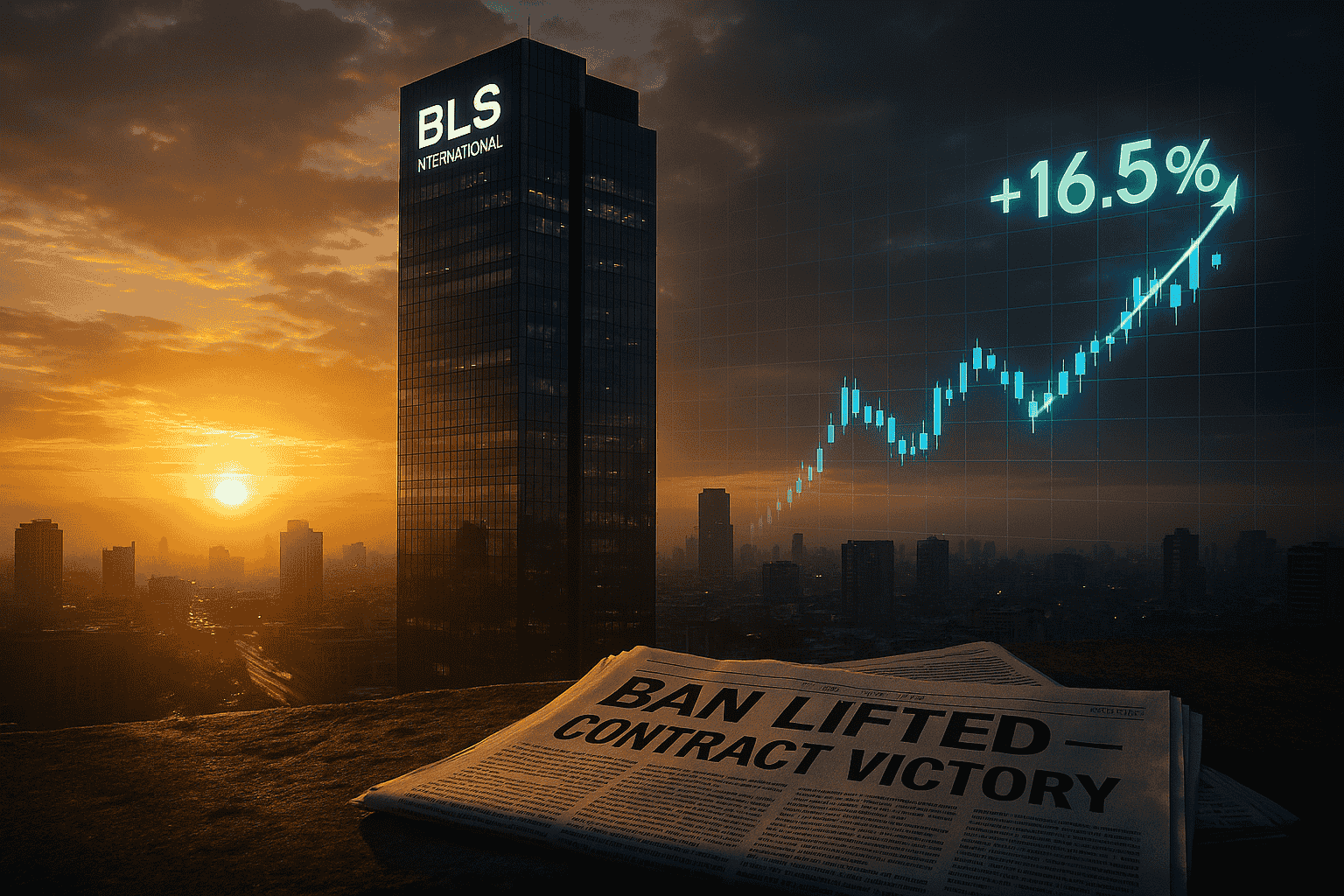
For BLS, this is more than a 16% rally, it’s a statement of survival.
It’s proof that in the face of uncertainty, execution and endurance still matter more than headlines.
As the company begins operations in China, the world and the markets will be watching closely.
Sources
- Business Standard – “BLS International shares jump 6% after contract win”
- Moneycontrol – “BLS International shares rise 8% as firm wins MEA contract”
- Business Today – “Shares zoom 13% on securing 3-year contract from MEA”
- Official NSE Filing – Press Release on Contract Win
- Economic Times – “MEA bans BLS International from tenders for two years”
- Economic Times – “How the ban affects visa and passport services”