
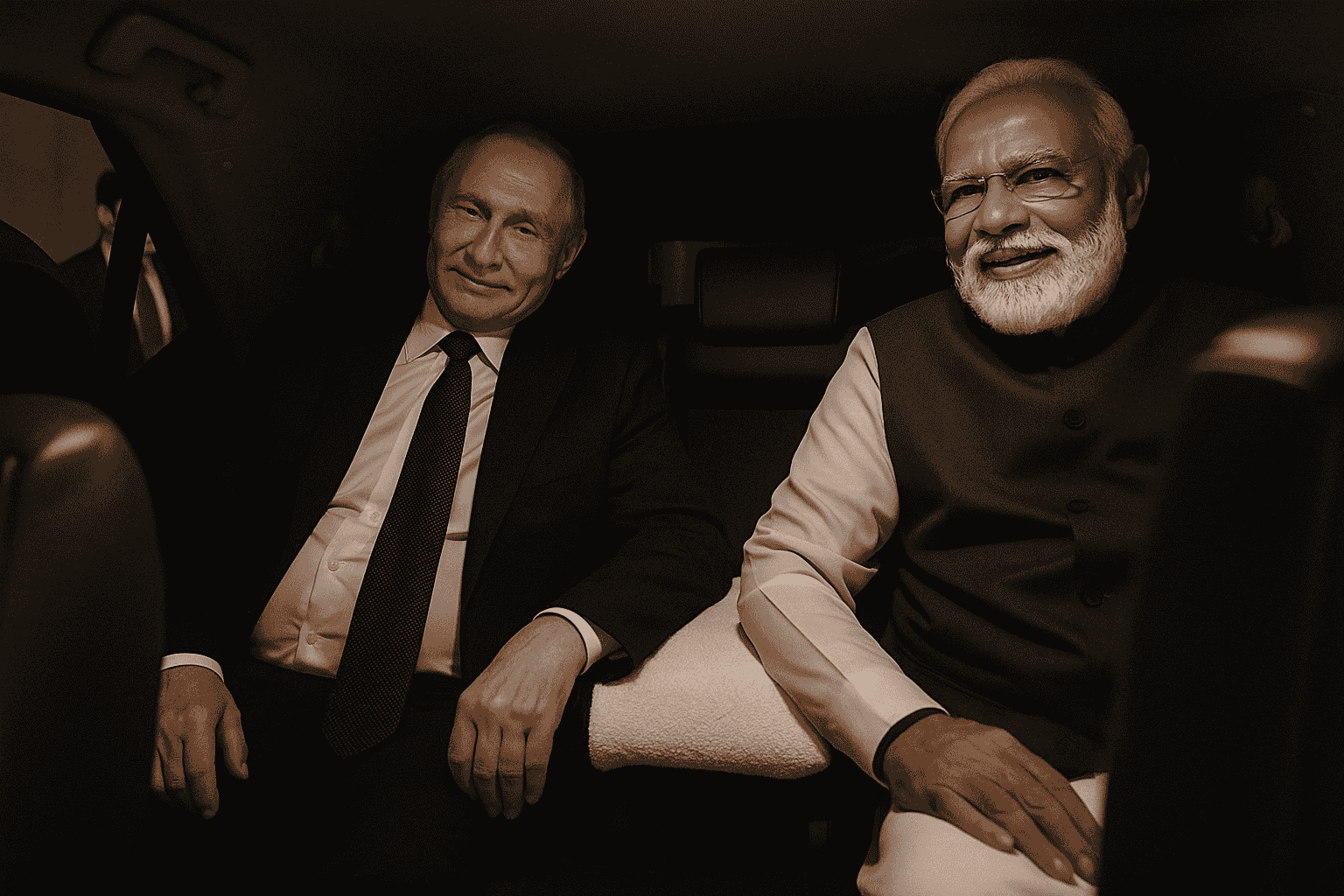
India - Russia Trade Relations: Where Things Stand in 2025
India and Russia, steadfast allies, have boosted bilateral trade to a record $68.7 billion in FY 2024-25 mostly from India's discounted Russian oil imports up sixfold from pre-pandemic days. Following Putin's December 2025 Delhi summit with Modi, they've set a $100 billion goal by 2030, diversifying into defense, pharma, and more amid sanctions and trade imbalances.
Of this total trade: Imports from Russia to India stood at ≈ US$ 63.8 billion.
Indian exports to Russia were around US$ 4.9 billion. (Reuters)
That means the trade balance is highly skewed; India imports significantly more from Russia than it exports. This gap reflects the dominance of energy and raw-material imports in this trade. (Moneycontrol) A large portion of the growth comes from India's imports of oil, petrochemicals, fertilizers, and other Russian exportsespecially discounted crude and energy-related products-partly because disruptions in global energy supplies and price volatility boosted demand for inexpensive alternatives. The global geopolitical situation (post-Ukraine-war sanctions on Russia) redirected Russian exports toward countries not participating in sanctionsIndia emerged as a major buyer. What India Exports to Russia And What’s Changing? While imports overshadow this trade, India is exporting an increasing range of goods to Russia. In FY 2024-25, major Indian export categories included: 1.Engineering goods (machinery, industrial components) 2.Electronics goods 3.Pharmaceuticals / drug formulations 4.Chemicals-products include organic and inorganic; industrial chemicals related to the sector. 5.INDO-India Brand Equity Foundation But demand is growing for a broader set of Indian exports. Russia has identified sectors where it wants to ease trade rules and increase imports from Indiafor example, consumer goods, pharmaceuticals, telecom-equipment and more. This will also help reduce the much-skewed trade imbalance in favour of Russian imports to India. Diversification reduces risks, as dependence on basic energy/raw-material imports makes the trade susceptible to global commodity cycles, sanctions, and political pressure. This opens opportunities for Indian manufacturers, pharma-producers, and tech firms to penetrate a vast market with long-term demand. Both countries have an ambitious goal: reaching US$100 billion annual trade by 2030. Achieving that would require not just continued energy imports, but significant growth in Indian exports to Russia and diversification into new sectors (manufacturing, pharmaceuticals, consumer goods, services, etc. In 2025, during high-level diplomatic contacts, both sides agreed to deepen cooperation-not just in trade but also in mobility of skilled labour, infrastructure, transport and logistics, and easier business-to-business frameworks. Plans are underway to streamline trade rules by reducing tariffs/non-tariff barriers and facilitating easier transactions, including proposals to trade in national currencies, rupee–rouble, possibly cushioning trade from global sanction pressures. OpportunitiesWhat Makes This Partnership Valuable Energy Security & Raw Material Supply: Crude Oil, Petrochemicals, Fertilizers, and Other Commodities Exported by Russia go a long way in meeting the Industrial and Energy Demands of India, often at competitive prices. Large market potential for Indian exports: With Russia opening up to manufacturing goods, pharmaceuticals, electronics, machinery, and more, India's export industries have a chance to grow significantly. Strategic autonomy & diversification: While ramping up relations with Russia simultaneously reaching out to other global partners will help India retain flexibility in its foreign and economic policy. The long-term growth potential: in case trade diversification succeeds, the relationship by the year 2030 could be much more balanced, being less dependent on volatile sectors like oil and commodities. Trade imbalance: Unless Indian exports scale up significantly, the heavy import skew may create structural issuescurrency outflow, high dependency on a few commodities, and vulnerability to price swings. Global geopolitics & sanctions risk: Ongoing war in Ukraine and associated Western sanctions on Russia may disrupt energy flows, payments, and broader economic cooperation. This would put an end to how far the India Russia trade can expand. Quality, price competitiveness, and conformity to Russian standards-which are not so easy for all sectors-are necessary if the Indian industry is to be successful in their merchandising in that country. Over-dependence on a few sectors: If trade remains dependent mainly on oil/energy/commodities, then the relationship continues to be vulnerable to the volatility of global commodity cycles. What to WatchKey Themes in the Coming Years Or, whether India can substantially increase its exports to Russia in the fields of manufacturing, pharmaceuticals, electronics, and engineering goods. Whether India and Russia can operationalize trade in national currencies and new payment mechanisms which could help insulate bilateral trade against global financial instability or sanctions. How Russia would respond to India's push for more balanced trade-increasing imports from India rather than just exporting oil/commodities. Whether the planned trade, mobility, and transport-infrastructure agreements come to something (e.g. easier shipping, better logistics, more Indian companies in Russian markets). External factors: global commodity price swings, geopolitical developments (Ukraine war, sanctions), and how they affect energy trade and strategic alignments. The India–Russia trade relationship in 2025 stands at a critical turning point. What once was a partnership heavily reliant on energy and raw-material imports has ballooned into a near-US$ 70 billion-a-year trade tie one of the strongest international commercial relationships India has today. Yet the structure remains skewed: India imports far more from Russia than it exports. The coming years will be pivotal: if both countries succeed in expanding Indian exports to Russia, diversifying the trade basket, and strengthening economic infrastructure and trade-facilitating agreements, this could evolve into a balanced, stable, long-term economic partnership. Conversely, if the relationship remains energy/commodity-heavy or if global politics and sanctions disrupt flows, the trade boom might prove fragile, vulnerable to external shocks. For India, this partnership offers a chance to secure energy and raw-material supply, gain access to new markets for its industries, and reinforce its strategic autonomy on the global stage. For Russia, India remains a vital export destination and a partner open to long-term cooperation. All told: the India–Russia trade story in 2025 is not just about record numbersit’s about possibility, strategy, and choices that will shape both nations’ economic trajectories for years to come. India–Russia Trade IBEF (India Brand Equity Foundation) trade data Sept 2025 India trade delegation to visit Moscow as U.S. tariffs hit exports” Reuters Russia, India aim to increase and diversify trade Reuters report from December 2025 “Russia identifies six key export areas for India; ready to ease trade rules” The New Indian Express, Dec 2025 The New Indian Express India–Russia: Exploring new frontiers for economic cooperation and partnership Daily Pioneer, 2025 India, Russia set sights on $100 billion trade goal ahead of 2025 India-Russia trade surges; oil imports set to peak in Nov 2025 reportWhat drove this sudden surge?
Why does this shift matter?
Strategic Objectives: Where India & Russia are Headed
The $100 Billion Trade Target by 2030
New Deals & Trading Infrastructure
Challenges & Risks Ahead
Conclusion: A Strategic Trade Partnership at a Crossroads
Sources