
Maharashtra CM Secures ₹14.5 Lakh Crore in Investment Commitments at Davos CM of Maharashtra gets investments of ₹14.5 lakh crore and 1.5 lakh job opportunities. During this meeting, governments and companies often announce investment plans, partnerships, and policy ideas, which is why “Davos” is frequently mentioned in global business and economic news. When a State goes to Davos, the objective is not just global visibility or headlines; it is to attract long-term capital, build confidence, and convert intent into execution. At the World Economic Forum (WEF) Annual Meeting 2026 in Davos, the Maharashtra government announced that it had signed 19 Memorandums of Understanding (MoUs) on the very first day, representing proposed investments worth around ₹14.5 lakh crore and the potential to generate over 1.5 lakh jobs. This announcement immediately placed Maharashtra at the centre of global economic discussions. But beyond the headline number lies a more important question: what does this actually mean for Maharashtra’s economy, India’s growth story, and employment on the ground? An MoU is not an immediate cash inflow. It is a formal expression of intent between the government and companies, outlining planned investments subject to approvals, land availability, infrastructure readiness, and market conditions. Some MoUs turn into full-fledged projects, while others may get delayed or scaled down. That said, a ₹14.5 lakh crore MoU pipeline is significant because it reflects global investor confidence in Maharashtra’s long-term economic potential, policy environment, and infrastructure roadmap. The MoUs signed span multiple sectors, such as: Manufacturing and green steel Renewable energy and power Digital infrastructure and data centres Logistics and warehousing Consumer markets and hospitality Urban development and large infrastructure projects This sectoral diversity is important because it reduces dependency on any single industry and helps create a more resilient economy. Maharashtra has consistently remained one of India’s most attractive investment destinations, driven by a combination of structural advantages. Maharashtra is one of India’s largest consumption markets, driven by Mumbai, the Mumbai Metropolitan Region (MMR), Pune, and several fast-growing urban clusters. For global companies, proximity to a large, affluent consumer base reduces market risk. Mumbai is India’s financial capital, while Pune is a major hub for manufacturing, IT, and engineering. The State already has deep supply chains, skilled talent pools, financial institutions, and professional services that facilitate project execution. Ports, airports, highways, rail networks, and industrial corridors give Maharashtra a logistical advantage. For export-oriented industries and large-scale manufacturing, this connectivity plays a critical role in reducing costs and improving efficiency. These factors collectively explain why Maharashtra continues to feature prominently in global investment conversations at platforms like Davos. A major theme accompanying the Davos discussions is the development of new urban and industrial growth zones, including what is often referred to as “Third Mumbai” in the Raigad region. Such large-scale planned developments are economically important because: They unlock large parcels of land for industrial and logistics use They reduce congestion pressure on Mumbai They allow the creation of modern, integrated business districts with better planning They support decentralised job creation closer to new residential clusters For investors, these zones offer predictability, clear land titles, infrastructure planning, and long-term visibility. If even a portion of the ₹14.5 lakh crore MoUs translates into real projects, it can significantly boost Maharashtra’s economic growth. Capital expenditure (capex) has a multiplier effect: Construction activity creates immediate employment Machinery, raw materials, and services generate indirect demand Operational projects create long-term jobs Increased incomes drive consumption across sectors This cycle strengthens local economies and supports sustained growth over multiple years. Successful investment execution improves State finances organically. Maharashtra can benefit from: Higher GST collections from increased economic activity Stamp duty and registration income from land and real estate transactions Electricity duties, local levies, and service-related taxes This improved revenue base allows the government to invest more in public infrastructure, education, and urban services without relying excessively on debt or tax hikes. Investments in logistics, urban infrastructure, and digital systems reduce hidden economic costs such as delays, congestion, and inefficiencies. Better infrastructure directly improves productivity for businesses and workers, making Maharashtra more competitive against other global hubs. Maharashtra is not a small regional economy. It is one of India’s largest contributors to GDP. Large investments here have spillover effects across the country: Suppliers and vendors from other States benefit Exports increase through ports and manufacturing hubs Foreign investors gain confidence in India’s policy and execution capabilities When Maharashtra performs well, it lifts national growth indicators. The sector mix highlighted in the MoUs aligns well with India’s long-term priorities: Manufacturing and industrial capacity building Renewable energy and sustainability Digital infrastructure and data economy Logistics and supply chain efficiency Execution in these areas could help India move up the global value chain rather than remaining a consumption-only economy. The projected 1.5 lakh jobs include both direct and indirect employment across different phases. Civil construction workers Transport and logistics staff Equipment operators and technicians Local service providers These jobs provide immediate income support and help absorb semi-skilled labour. Manufacturing plant workers and supervisors Engineers, technicians, and IT professionals Logistics, warehousing, and supply-chain roles Facility management and support services While sectors like data centres may not create massive direct employment, they generate high-value jobs and strong indirect demand through vendor ecosystems. MoUs are only the first step. The real test lies in conversion and execution. Historically, a meaningful percentage of MoUs signed at global forums do convert into projects, but the pace and scale depend on several factors: Speed of land allocation and approvals Infrastructure readiness (power, water, transport) Global economic conditions Corporate balance sheets and demand outlook Even partial conversion of a ₹14.5 lakh crore pipeline can materially impact Maharashtra’s economy if managed well. A balanced view must acknowledge potential challenges: Over-optimistic projections: Investment numbers are often phased over many years Execution delays: Clearances and coordination can slow progress Global uncertainty: Interest rates, commodity cycles, and geopolitical risks affect capex decisions Regional imbalance: Investments may cluster around already-developed regions unless actively redirected Addressing these risks requires transparency, strong project monitoring, and a focus on last-mile execution. To assess whether this Davos moment turns into real economic value, observers should track: Project-wise announcements and timelines Ground-level activity, such as land allotments and construction Infrastructure upgrades linked to these projects Actual employment numbers over time Geographic spread of investments across Maharashtra Maharashtra’s announcement of ₹14.5 lakh crore in MoUs at Davos 2026, with the potential to create over 1.5 lakh jobs, is a powerful signal of investor confidence and economic ambition. It highlights the State’s intent to position itself as a global investment destination across manufacturing, infrastructure, energy, and digital sectors. However, the true success of this initiative will not be measured in announcements or MoUs. It will be measured in projects completed, factories operational, jobs created, and long-term economic resilience built on the ground. If execution matches intent, this Davos moment could mark a meaningful acceleration in Maharashtra’s growth story with positive ripple effects across the Indian economy.Understanding the Davos Announcement
Why Maharashtra Attracts Global Investors
1. Market Size and Consumption Power
2. Financial and Industrial Ecosystem
3. Infrastructure Backbone
The Role of “Third Mumbai” and New Growth Zones
How This Impacts Maharashtra’s Economy
1. Capital Investment and the Growth Multiplier
2. Revenue Generation Without Higher Taxes
3. Productivity and Efficiency Gains
How This Investment Impacts India’s Broader Economy
1. How Maharashtra’s Growth Moves India’s Economic Needle
2. Could Strengthen India's Manufacturing and Infrastructure Push
3. How this move could generate more employment in Maharashtra
Short to Medium-Term Tenure: Construction and Setup
Long-Term: Operations and Services
The Key Issue: Will These MoUs Translate into Real Projects?
Risks and Realities to Keep in Mind
Things to look out for!
Conclusion
Blogs / Maharashtra CM Secur...
Maharashtra CM Secures ₹14.5 Lakh Crore
2026-01-20 · 6 min read
Sector - Business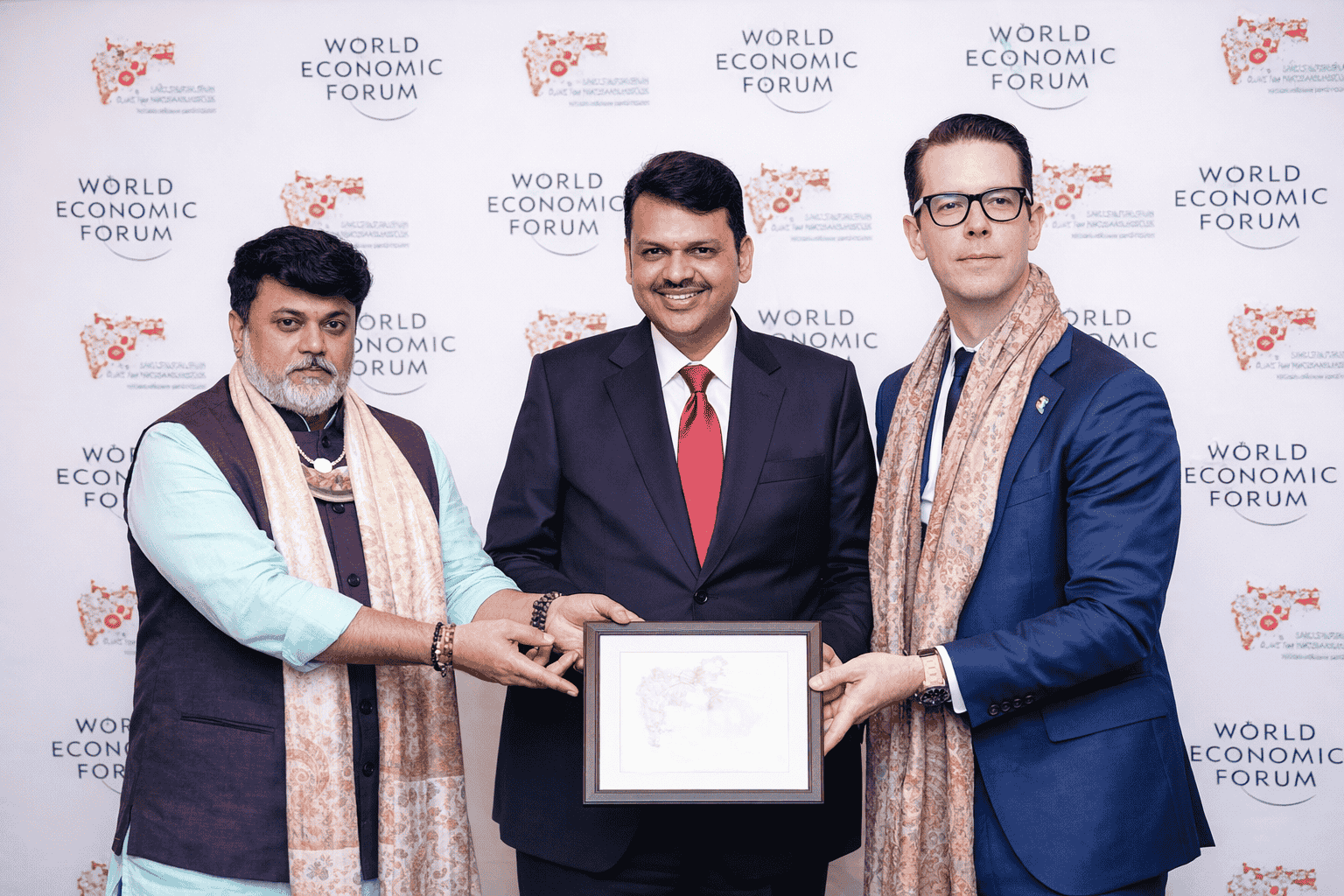
To read the RA disclaimer, please click here