
The morning sun spilled across Mumbai’s historic Dalal Street, bouncing off the sandstone of the Bombay Stock Exchange. Inside, the hum of trading terminals grew louder, like a diesel engine revving before a long journey. But this wasn’t just any trading day. This was the morning Tata Motors’ commercial vehicle business, the company that’s hauled India’s goods, dreams, and highways for decades stepped onto the market floor all by itself for the first time. There were no fireworks, no VC-funded drama. Just a quiet sense of history unfolding. For decades, Tata Motors has been two companies living under one roof: one making passenger cars (and yes, those electric beauties and JLR icons), and another building the trucks and buses that quite literally keep India moving. On November 12, 2025, the workhorse finally got its own nameplate: Tata Motors Commercial Vehicles (TMCV). And when its shares started trading, the market stood up and took notice. On the NSE, TMCV debuted at ₹335 a share, a strong 28% above its implied value of ₹260.75. On the BSE, it opened just a shade lower at ₹330.25. That’s not a gentle rollout. That’s a truck revving through the gate with its headlights blazing. And here’s the big number: put the newly listed CV arm and the passenger-vehicle (PV) arm together, and Tata Motors’ total market value crossed ₹2.7 lakh crore on day one. That’s real value unlocked in real time. But beyond the trading screens and ticker boards, this story is about something deeper: focus, freedom, and a century-old brand learning to reinvent itself once again. Imagine Tata Motors as a giant industrial family home. Over time, those two worlds began to pull in different directions. The cars needed style, software, and global branding. The trucks needed engineering, efficiency, and a pulse on India’s highways. So Tata did what smart families do, it gave both children space to grow on their own. For every 1 share of Tata Motors you held on October 14, 2025, you received 1 share of the new TMCV. The company didn’t shrink; it simply split into two clear, focused entities, each now free to chart its own journey. And when trading began on November 12, the reception was electric. In business, focus is the new fuel. Tata Motors just proved it. Now that the CV business is independent, it can chase its own goals without waiting for approvals that compete with the car side. It can decide how much to invest, where to expand, and when to shift gears. Expect quicker decisions and cleaner reporting. Before the split, Tata Motors was a mixed bag; trucks, cars, EVs, luxury brands all rolled into one valuation. Now, the market can price each business on its own merit. No more “conglomerate discount.” Two tickers. Two stories. Two engines. If you believe India’s highways are about to get busier and freight is ready to boom, TMCV is your ticket. That 28% listing premium wasn’t just a one-day cheer. It was a sign of confidence in the long-term roadmap, India’s infrastructure boom, replacement cycles, new-fuel technologies, and Tata’s proven leadership. The street was saying: this company isn’t just driving, it’s accelerating. Let’s make this simple. You now own two engines instead of one. You can finally build smarter portfolios. The story becomes easier to value. Governance just got tighter. India’s infrastructure boom means more freight, more trucks, and more replacement demand. Operating leverage could kick in as volumes rise, improving profitability faster than revenues. Strategic freedom allows TMCV to expand exports, invest in alt-fuel tech, and enter new partnerships, all on its own terms. Cyclical bumps are part of the journey. If freight slows or fuel costs rise, CV demand can take a hit. Execution risk remains. Splitting a company doesn’t automatically guarantee better margins, it only makes success or failure more visible. Valuation discipline matters. The debut premium looks great, but prices can swing as the market finds its balance. So here’s the million-rupee question: what should you do now? If you believe India’s logistics engine is about to roar, TMCV could be your cyclical play. Because this isn’t the end of Tata’s story, it’s the beginning of two. The trucks will keep rolling. EVs will keep evolving. And the shareholders? They’ve just been handed the keys to two engines of India’s mobility future. The demerger wasn’t a goodbye. It was a green signal. Economic Times: “Tata Motors Commercial Vehicles shares debut at 28% premium…” Business Standard: “Tata Motors CV shares make strong debut, close at ₹330 on listing day.” Mint: “Combined market cap crosses ₹2.7 lakh crore; listing live updates.” Times of India: “Tata Motors CV listing: Stock debuts strong with 28% premium.” Financial Express: “Listing a ‘defining moment’ in company’s journey – N Chandrasekaran.” What Really Happened
One side buzzed with design studios and electric dreams, the passenger vehicle division and the globally admired JLR. The other side was all about grease, grit, and logistics, the commercial vehicles that move India’s economy.
Investors didn’t just buy stock; they bought into a story of clarity and confidence. Why the Market Loved It: The Power of Focus
1. A Sharper Playbook
2. True Price Discovery
3. Freedom for Investors
If you see EVs and design-led innovation driving the future, Tata Passenger Vehicles (TMPV) is your lane.
Or you can do what many investors love, hold both and let each part of Tata’s story play out in your portfolio.4. Sentiment Tailwinds
What This Means for You
Earlier, one line in your portfolio told the whole Tata story. Now, you have two, each with different speeds and directions.
CVs are cyclical, linked to freight, GDP, and infrastructure spending. PVs and EVs are more consumer-driven and brand-heavy. You can balance both to suit your risk appetite.
Analysts can finally compare TMCV with global truck majors and track performance transparently.
Each business now has its own board, CEO, and accountability. Incentives are sharper. The Tata Group’s chairman, N. Chandrasekaran, even called this demerger a “defining moment” for the company’s next era.The Bullish View
The Realistic View
The Investor’s Dilemma: Hold, Trim, or Add?
If you’re betting on EVs, design, and global branding, TMPV may be more your style.
And if you’re a long-term believer in Tata’s heritage of reinvention, why choose? Hold both. Sources
Blogs / Tata Motors’ CV Shar...
Tata Motors’ CV Shares Roar Onto the Street: A Story Abou...
2025-11-12 · 5 min
Sector - Finance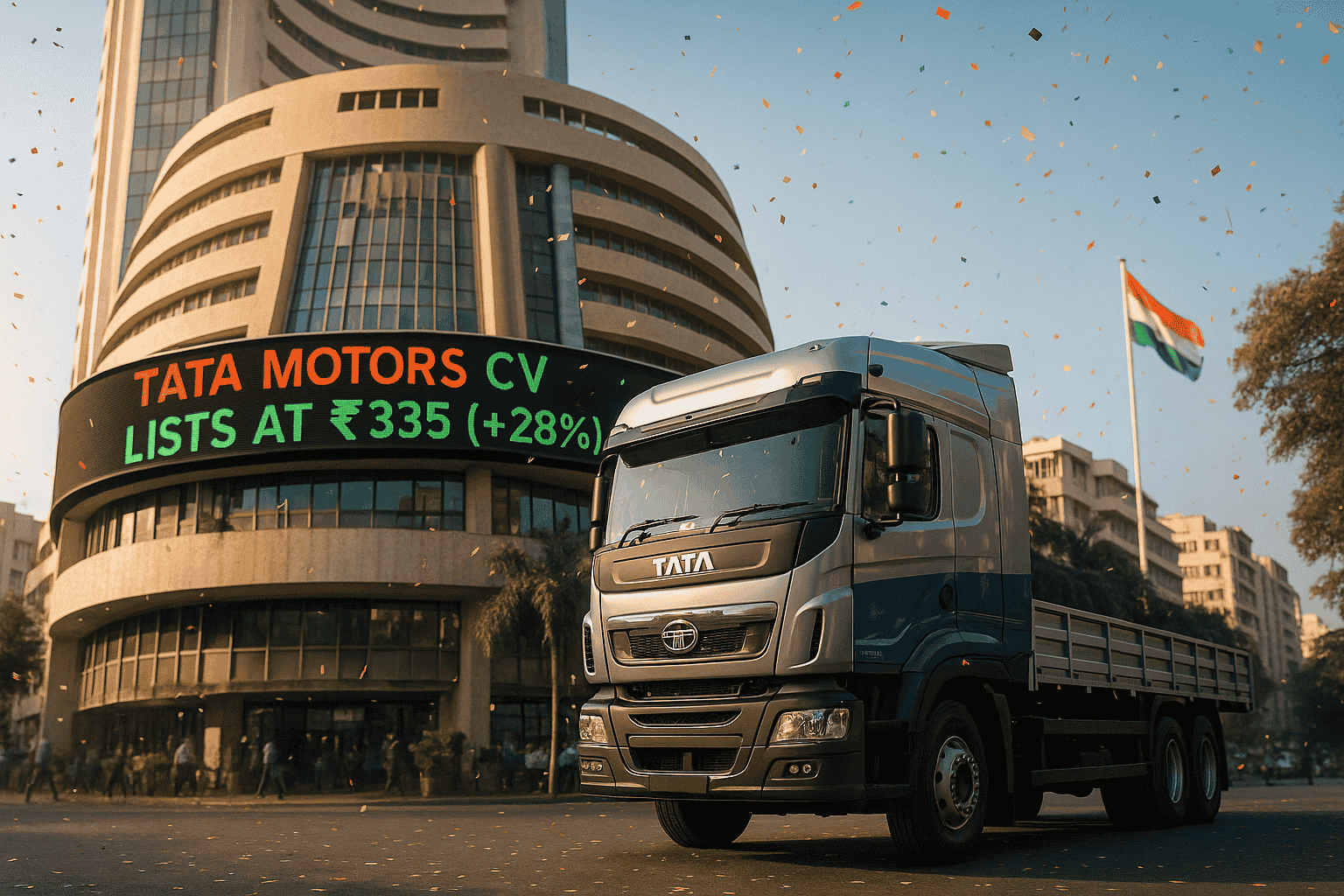
To read the RA disclaimer, please click here