
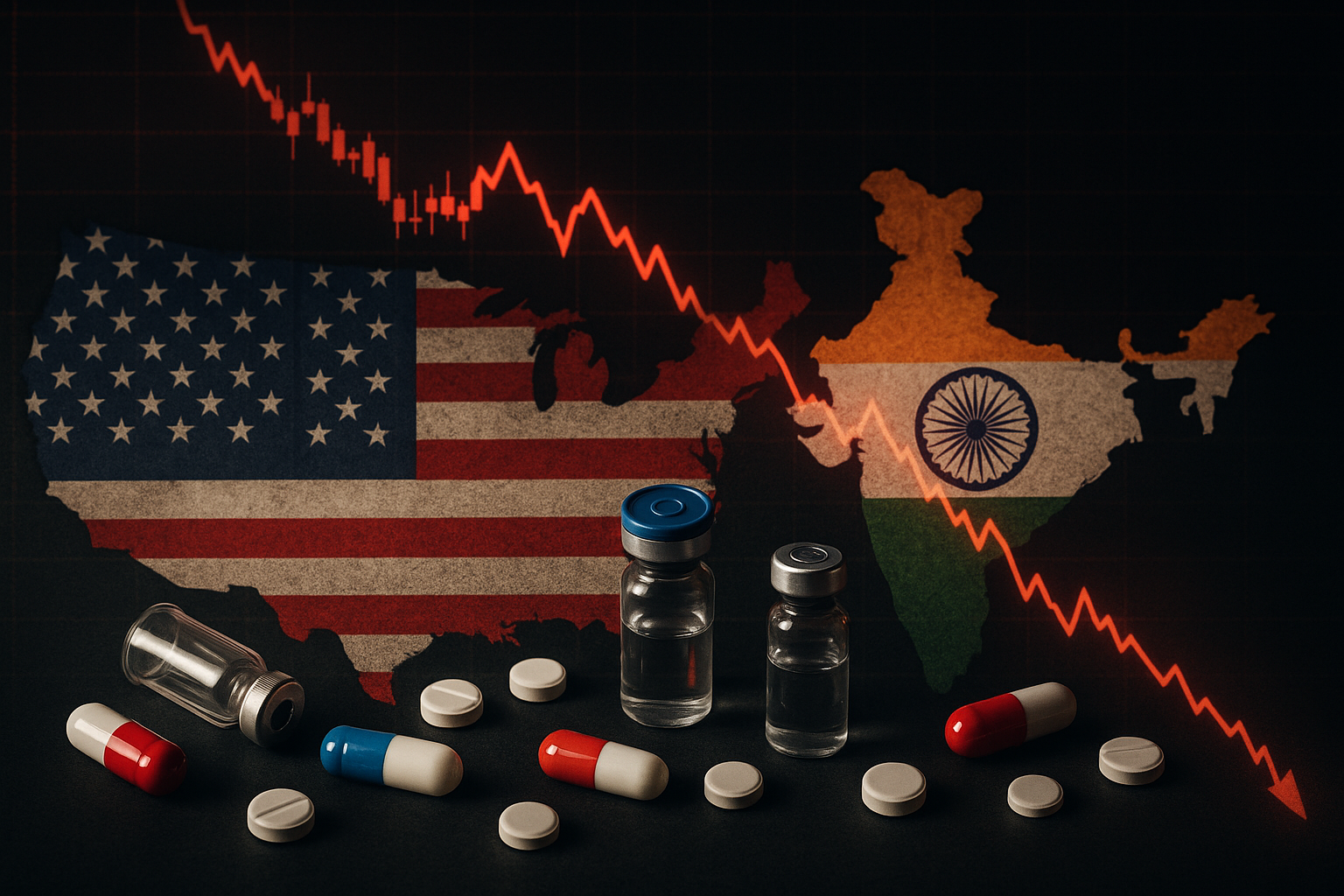
“Indian pharma exporters brace for Trump’s 100% pharma tariff. Discover how biologics, complex generics, and leading companies like Sun Pharma and Biocon are affected.”
In a bold move to bolster U.S. pharmaceutical manufacturing, President Donald Trump announced a 100% tariff on imported branded and patented drugs, effective October 1, 2025. This decision mandates that foreign pharmaceutical companies establish U.S.-based production facilities to avoid the steep import duty. While this primarily targets multinational corporations, Indian pharmaceutical companies, especially those focusing on biologics and complex generics are beginning to feel the pressure.
The Indian Pharma Landscape: From Generics to Complex Therapies
India has long been a global leader in the production of generic medications, supplying over 40% of the U.S. market. In fiscal year 2025, Indian pharmaceutical exports to the U.S. reached approximately $10.5 billion. However, many Indian firms have been shifting focus toward higher-value segments like biologics and complex generic products that are more challenging to replicate and often fall under patent protection. Companies such as Sun Pharma, Dr. Reddy's Laboratories, Biocon, Aurobindo Pharma, Glenmark, and Lupin have been expanding their portfolios in these areas to access regulated markets like the U.S. The New Indian Express.
Immediate Impact: Stock Market Reactions
Following the tariff announcement, Indian pharmaceutical stocks experienced a significant downturn. Major players like Sun Pharma, Cipla, and Dr. Reddy's saw declines of up to 5%. Dr. Reddy's, in particular, is highly exposed to the U.S. market, with nearly half of its earnings derived from U.S. operations, making it especially vulnerable to such policy shifts. The Times of India.
The Tariff's Scope: Branded Drugs vs. Generics
The current tariff explicitly targets branded and patented drugs. Generic medications, which constitute the majority of India's pharmaceutical exports to the U.S., are exempted from this duty. However, the ambiguity surrounding the future inclusion of complex generics and biosimilars under these tariffs has raised concerns. If such products were to be affected, it could disrupt India's strategy of moving up the value chain in the pharmaceutical sector www.ndtv.com.
Strategic Responses: Navigating the New Landscape
To mitigate the impact of these tariffs, Indian pharmaceutical companies may consider the following strategies:
- Establishing U.S.-based Manufacturing: Investing in production facilities within the U.S. to qualify for tariff exemptions.
- Diversifying Export Markets: Expanding into other regions to reduce dependency on the U.S. market.
- Enhancing Product Portfolios: Focusing on the development of generic drugs and other non-patented products that remain unaffected by the tariffs.
Conclusion: A Crossroads for Indian Pharma
While the immediate impact of the 100% tariff on Indian pharmaceutical exports may be limited, the uncertainty surrounding its potential expansion to include complex generics and biologics poses a significant challenge. Indian pharmaceutical companies must remain agile, adapting their strategies to navigate this evolving landscape and sustain their position in the global market.