
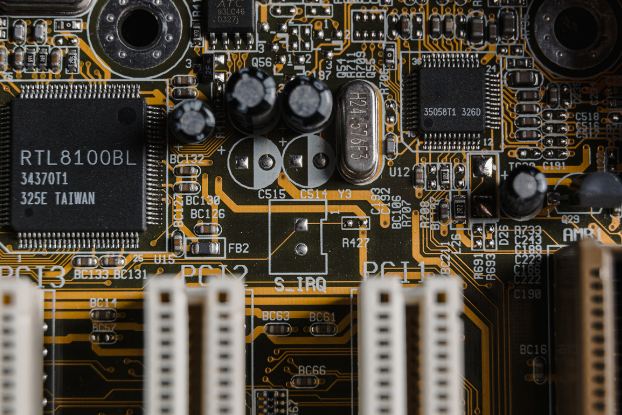
If you’ve been following the global technology sector, you’ll know the word “semiconductor” comes up with increasing frequency in terms of supply-chain disruption, artificial-intelligence (AI) demand, as well as government policy. Among retail investors in India, the phrase semiconductor stocks often evokes images of the next “big hardware boom”. But the reality is far more nuanced.
Definition
Semiconductor stocks are shares of companies involved in the design, manufacture, assembly, testing, packaging and sale of semiconductor devices (“chips”) and related components. They may range from “fabless” design houses (which create chip designs but outsource manufacture) to foundries (which fabricate wafers) to assembly & test houses (which handle packaging and testing) to companies making equipment or materials used in chip manufacture.
Types
Chip design/fabless: Companies design the chip architecture, IP, but outsource manufacture (e.g., some lesser-known Indian names).
Foundries / Wafer fabrication: Companies with manufacturing plants that make silicon wafers with transistor circuitry. These are highly capital-intensive.
OSAT (Outsourced Semiconductor Assembly & Test): Companies focused on back-end services like assembly, packaging, testing of chips. India is trying to build strength here.
Electronic manufacturing services (EMS): These may not make the chips themselves but assemble devices using chips (smartphones, TVs) and increasingly may move “up-stream” into chip-related components.
Ecosystem/Equipment/Materials: Companies making the tools, chemicals, or materials (e.g., photoresist, lithography equipment) that semiconductor fabrication requires.
Top Semiconductor Stocks in India
Important note: Not all of these are pure semiconductor fabricators; some are adjacent players or conglomerates with semiconductor interests. Do your own due diligence before investing.
HCLTech is one of India’s most mature technology service providers, but beneath the service-oriented exterior lies a surprisingly strong hardware and engineering DNA. Over the last decade, the company has quietly built competencies in embedded systems, chip design verification, and engineering R&D. What makes HCLTech interesting in the semiconductor theme is not that it manufactures chips, but that it sits at the “brains of the operation” designing, testing, validating and helping global clients scale their semiconductor products. Return on equity: 25.0% Debt to equity: 0.10 Current ratio: 2.29 Dividend Yield: 3.37% Return on assets: 17.0% ROCE: 31.6% Face Value: ₹2.00 Strong engineering talent pool in embedded systems and chip design. Global client base gives it exposure to semiconductor R&D demand. Low-capital-intensity model compared to pure-play chip makers. Strategic JVs give optionality in the semiconductor manufacturing ecosystem. Very limited direct semiconductor manufacturing experience. Semiconductor plans may take years to materialize. Dependent on global IT spending cycles. Valuation could be impacted if semiconductor ventures underperform. Vedanta is a metals-and-mining heavyweight with ambitions far beyond its traditional business lines. The company’s push into semiconductors stems from a long-held belief that India’s next industrial revolution will need domestic chip fabrication capacity. Vedanta brings financial muscle, experience in large-scale industrial construction, and a willingness to take bold bets, traits rarely seen in Indian conglomerates. However, its semiconductor story is still in the conceptual stage. The company wants to set up a fab ecosystem, but fabs require precision engineering, next-gen technology, and ecosystem maturity. Vedanta is essentially attempting to jump several rungs on the value ladder in one leap. Return on equity: 38.5% Debt to equity: 2.12 Current ratio: 0.73 Dividend Yield: 8.36% Return on assets: 9.77% ROCE: 25.3% Face Value: ₹1.00 Large balance sheet and experience in setting up heavy industrial projects. Willingness to take bold bets where peers hesitate. Can leverage synergies from its materials and metals businesses. Semiconductor fabrication is a completely new domain for the company. High execution and technology risk fabs require deep expertise. Heavy debt and governance concerns may reduce investor confidence. Long gestation period before any meaningful revenue is realized. MosChip is one of those rare Indian mid-caps that actually breathe semiconductors. Founded by engineers who worked in Silicon Valley, the company has always positioned itself as a design-centric semiconductor solutions provider. Unlike conglomerates chasing hype, MosChip’s business model is grounded: create IP, offer custom chip design services, build IoT connectivity solutions, and partner with global fab houses to bring designs to life. It plays at the intersection of chip design and engineering services, making it one of the most authentic semiconductor beneficiaries in India. Return on equity: 11.2% Debt to equity: 0.13 Current ratio: 2.17 Dividend Yield: 0.00% Return on assets: 8.08% ROCE: 11.9% Face Value: ₹2.00 One of the few authentic semiconductor design players in India. Leadership with Silicon Valley roots and technical expertise. High scalability potential due to asset-light design model. Growing relevance in IoT, custom ASIC design, and embedded systems. Small scale makes it vulnerable to revenue volatility. Relies heavily on project-based business; order cycles can be uneven. Needs continuous investment in talent and IP to compete globally. Thin margins compared to global design houses. BEL is the closest India has to a “strategic electronics command center.” This is the company that builds radar systems, secure communication networks, advanced electronic warfare modules all of which depend heavily on semiconductor components. Unlike small private players, BEL doesn’t chase glamour. It quietly manufactures mission-critical electronics for defence and aerospace, sectors where reliability matters more than speed. Over decades, BEL built deep expertise in semiconductor components, microelectronics, and specialised chip packaging for high-precision environments. Return on equity: 29.2% Debt to equity: 0.00 Current ratio: 1.82 Dividend Yield: 0.58% Return on assets: 13.2% ROCE: 38.9% Face Value: ₹1.00 Strong defence ecosystem positioning and government backing. Decades of experience in microelectronics and strategic components. Consistent profitability and solid order book visibility. Low debt and high operational discipline. Indirect semiconductor exposure not a pure-play chip manufacturing company. Slow growth cycles due to government procurement timelines. High working capital days can pressure cash flows. Might miss out on rapid technological shifts in commercial chip markets. ASM is a boutique engineering services firm that sits in a uniquely technical niche designing and supporting advanced manufacturing tools used in semiconductor fabs. Think automation equipment, wafer-handling systems, precision mechanical systems. ASM benefits from being in the upstream of semiconductor manufacturing: it doesn’t manufacture chips, but helps build the machines that do. It’s a niche sector with high entry barriers, but the challenge is scale. ASM is more of a precision-engineered specialist rather than a volume-driven business. Return on equity: 16.8% Debt to equity: 0.52 Current ratio: 1.66 Dividend Yield: 0.10% Return on assets: 9.39% ROCE: 19.3% Face Value: ₹10.0 Deep niche expertise in semiconductor equipment engineering. Works in a high-entry-barrier domain that requires precision. Strong relationships with fab equipment manufacturers. Low competition in its specialized segment. Small operational scale limits its bargaining power. Revenue dependent on global capex cycles of fabs. Requires continuous skill upgrades to stay relevant. Liquidity constraints could limit growth. Tata Elxsi is the creative engineering arm of the Tata Group, known for blending design thinking with hard engineering. In the semiconductor space, it drives innovation at the embedded systems level automotive electronics, consumer electronics software stacks, chip design support, and system-on-chip (SoC) integration. The company thrives where hardware meets software. Whether it is ADAS systems in cars or AI acceleration in devices, Tata Elxsi’s engineering teams build the layers that sit atop silicon. Unlike high-capex fab businesses, Elxsi plays in IP creation and design services high-margin, scalable, and global. Return on equity: 29.3% Debt to equity: 0.06 Current ratio: 4.38 Dividend Yield: 1.42% Return on assets: 23.2% ROCE: 36.3% Face Value: ₹10.0 Strong footing in embedded electronics design and system integration. High-margin business model focused on IP and engineering. Trusted by global semiconductor and auto-electronics leaders. Strength in R&D, innovation, and design leadership. No direct semiconductor fabrication exposure. Highly competitive industry global design houses offer similar services. Premium valuation leaves less room for error. Revenue concentration in a few high-tech verticals can create cyclicality. SPEL is India’s OG semiconductor packaging and testing company, a survivor in a space dominated by global giants. Its business revolves around post-fabrication semiconductor processing: packaging ICs into usable forms and testing them for quality. This is the part of the value chain where precision, consistency, and yield optimization matter more than branding. SPEL has carved out a niche domestically, but faces age-old challenges: limited capacity, outdated equipment cycles, and the need for constant modernization. Return on equity: -36.1% Debt to equity: 2.40 Current ratio: 0.77 Dividend Yield: 0.00% Return on assets: -6.07% ROCE: -10.8% Face Value: ₹10.0 One of India’s only dedicated OSAT (Assembly & Testing) players. Strategic relevance in the post-fab semiconductor value chain. Potential to benefit significantly if India pushes domestic chip production. High-entry-barrier business requiring specialized clean-room facilities. Small facility size limits global competitiveness. Requires heavy, ongoing capital expenditure to stay technologically updated. Vulnerable to fluctuations in global OSAT pricing. Financial performance has been inconsistent. Dixon is India’s manufacturing engine for consumer electronics televisions, smartphones, wearables, processors, PCBs, and more. While not a chip fabricator, Dixon plays at the “last mile” of semiconductor consumption: assembling electronics that rely on chips. The company has mastered high-volume, cost-efficient manufacturing, giving it a pseudo-semiconductor flavor. As supply chains shift from China to India, Dixon is uniquely placed to benefit from the tidal wave of electronics demand. Return on equity: 32.8% Debt to equity: 0.34 Current ratio: 1.01 Dividend Yield: 0.05% Return on assets: 7.32% ROCE: 40.0% Face Value: ₹2.00 India’s EMS manufacturing leader with strong operational execution. Beneficiary of China+1 global manufacturing shift. Increasing backward integration into components and circuit boards. High-volume manufacturing expertise creates strong operating leverage. Thin margins due to contract manufacturing nature. Heavy reliance on client volumes; weaker demand can impact earnings. Not a pure semiconductor business indirect exposure. Requires constant capex to keep up with new technologies. CG Power has undergone one of the most dramatic corporate transformations in Indian industrial history. Previously a power equipment maker, the company reset its focus to emerging high-tech segments like motors, automation, and increasingly, semiconductor packaging components and RF solutions. The semiconductor angle comes through its partnership-driven expansion into OSAT services and RF component manufacturing high-tech segments with rising global demand (especially due to 5G and AI edge devices). Return on equity: 27.7% Debt to equity: 0.02 Current ratio: 1.72 Dividend Yield: 0.17% Return on assets: 14.5% ROCE: 37.5% Face Value: ₹2.00 Clear strategic shift toward high-technology electronics and RF components. Benefit of new ownership & restructuring improving financial discipline. Early-mover advantage in India’s semiconductor packaging ambitions. Potential synergies with existing industrial electronics business. Risks Transition risk legacy businesses may drag returns. Semiconductor initiatives are in very early phases. Technology partnerships are crucial; execution delays may occur. Competitive landscape for OSAT and RF components is tough. MIC Electronics is a small player with a legacy in LED displays and digital signage. While not a semiconductor company in the traditional sense, MIC relies heavily on semiconductor components and has long-standing expertise in LED module manufacturing. Its relevance to the semiconductor theme comes from its gradual shift toward LED chip-based products and potential ambitions to move deeper into component manufacturing. MIC is a tiny, high-beta play where execution (and sometimes survival) is the key variable. Return on equity: 5.57% Debt to equity: 0.20 Current ratio: 1.90 Dividend Yield: 0.00% Return on assets: 4.22% ROCE: 8.71% Face Value: ₹2.00 Strengths Long-standing experience in LED module engineering. Asset-light operations in certain product lines. Potential to benefit from domestic LED manufacturing demand. Flexible business model suitable for small-scale electronics. Risks Extremely small player with high business volatility. Limited semiconductor relevance makes thematic benefit uncertain. Financial track record lacks consistency. High dependence on a narrow product category. Investing in semiconductor stocks requires a sharper lens than traditional sectors because the industry is cyclical, capital-heavy, highly technical, and globally intertwined. Here are the most important factors an investor should evaluate: 1. Position in the Value Chain Not all semiconductor companies are created equal. The value chain spans: Chip design (high-margin, IP-driven) Fabrication (capital-intensive, technology-driven) Assembly, testing, packaging (precision-driven, scale-dependent) Component manufacturing (mid-margin, volume-heavy) Electronics assembly & EMS (low-margin, scale-focused) 2. Financial Strength & Capital Allocation Semiconductor investments can empty balance sheets quickly. Before investing, examine: Debt levels Cash reserves Profitability & margin consistency Capex discipline Return on capital (ROCE/ROE) 3. Technological Capability & Talent Depth Semiconductors demand world-class engineering, clean-room precision, and advanced R&D. Ask: Does the company have proven engineering expertise? Is the leadership experienced in chip design, electronics, fabrication, or OSAT? Is it dependent on external technology transfer? Companies without technical depth risk becoming “headline-only” plays. 4. Government Policies & Incentives India’s semiconductor mission offers billions in subsidies and incentives but approvals are selective. Consider: Does the company qualify for PLI or fab incentives? Are regulatory approvals already in place? Is the business aligned with India’s strategic goals? Policy alignment can accelerate growth; lack thereof adds uncertainty. 5. Global Competition & Industry Cyclicality Semiconductors are cyclical. Demand surges during tech booms (AI, EVs, 5G) and cools during recessions. Also consider: Competition from Taiwan, South Korea, China, and the US. Barriers to entry in advanced nodes. Technology obsolescence risk. An Indian company must compete or collaborate globally, not just domestically. Disclaimer: The information provided above is for educational and informational purposes only. Investing in stocks involves risks. Please consult your financial advisor or conduct your own research before making any investment decisions. Semiconductors are the beating heart of modern technology from smartphones to AI supercomputers, EVs to defence systems. India is at an exciting but early stage of its semiconductor journey. That means significant opportunity, but also elevated risk.1. HCL Technologies Ltd
Strengths
Risks
2. Vedanta Limited
Strengths
Risks
3. MosChip Technologies
Strengths
Risks
4. Bharat Electronics Limited (BEL)
Strengths
Risks
5. ASM Technologies Ltd.
Strengths
Risks
6. Tata Elxsi Ltd
Strengths
Risks
7. SPEL Semiconductor Ltd.
Strengths
Risks
8. Dixon Technologies India Ltd
Strengths
Risks
9. CG Power & Industrial Solutions
Strengths
10. MIC Electronics Ltd.
Factors to Consider Before Investing in Semiconductor Stocks
Conclusion