
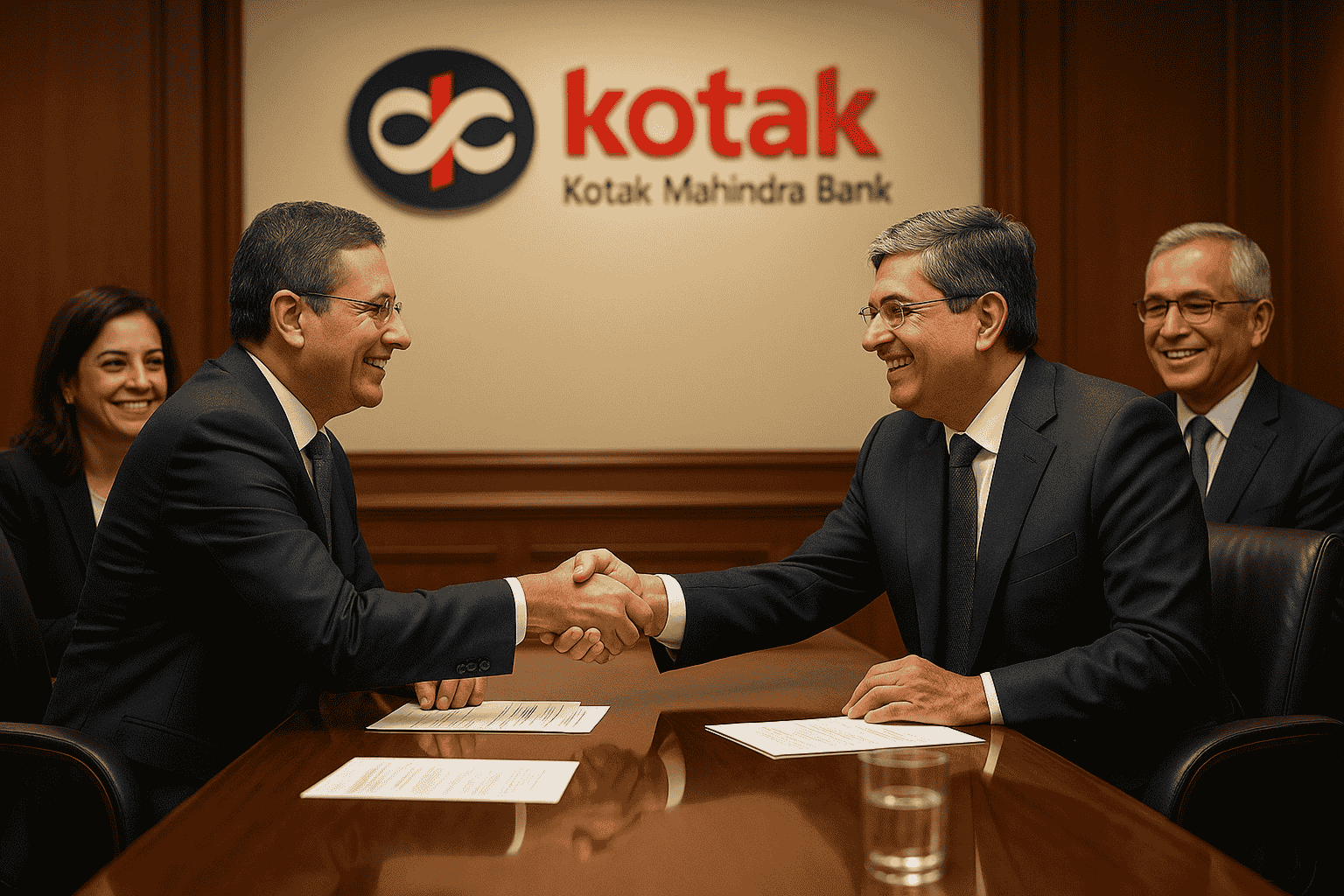
Next week, the boardroom at Kotak Mahindra Bank will host a conversation that hasn’t taken place in nearly fifteen years, the possibility of a stock split. It’s a move that can reshape investor sentiment, widen participation, and signal confidence in the bank’s future. But beyond all the financial jargon, what does this really mean? Why now? And how could it impact the bank’s story going forward?
Let’s break it down simply, in a relatable, human way.
A Stock Split Explained: A Simple Pizza Story
Think of Kotak’s stock as a big pizza. For years, it has been sliced into a certain number of large pieces. As the years passed, each slice became more and more valuable. That’s wonderful for investors who already owned slices, but for many newcomers, the price per slice began to feel too high.
A stock split doesn’t change the size of the pizza at all. It just creates more slices.
If one slice becomes two or five smaller slices, each slice becomes more affordable. Investors still own the same value just in smaller, more accessible pieces.
Kotak’s board is now considering dividing its shares (currently of ₹5 face value) into a greater number of smaller-value shares. The exact ratio will be decided at its meeting on 21 November 2025, as disclosed in filings and news reports.
Why This Move Makes Sense Now
A company that hasn’t split its stock in fifteen years deciding to talk about it again is not a small moment. There are several reasons why the timing feels right.
1. Making the Share More Affordable
Kotak’s stock has been trading in the ₹2,000+ range. For many small or first-time investors, that price feels intimidating. A split makes the share price look more reachable, inviting more retail participation.
2. Improving Liquidity
When there are more shares available in the market, trading usually becomes smoother. Higher liquidity means smaller investors don’t feel locked out, and price movements become healthier and more stable.
3. Signalling Confidence
Companies usually split their stock when they believe growth will continue. It reflects the sentiment: “We’re strong, stable, and optimistic about increasing value again.”
4. Perfect Timing After 15 Years
The last time Kotak split its shares was back in 2010. Since then, the market has evolved, digital trading has exploded, and younger investors have joined in huge numbers. This is a great moment to rethink accessibility.
What the Board Should Carefully Evaluate
A stock split might sound straightforward, but it’s a strategic choice. The board will weigh some essential factors:
1. Choosing the Right Ratio
A balanced ratio like 2-for-1 or 5-for-1 makes shares more accessible without making them too cheap. If the post-split price becomes too low, it can lead to excessive speculation.
2. Clear Communication With Investors
Investors need to understand that:
They are not getting free shares.
Their total investment value doesn’t immediately change.
The purpose is to broaden participation.
A clear and simple explanation avoids confusion.
3. Remembering This Isn’t a Magic Fix
A stock split doesn’t change profitability, NPA levels, cost structures, or growth plans. Fundamentals still matter. The split is a signal not a substitute.
4. Regulatory Compliance
Timelines, record dates, announcements, disclosures SEBI requires precision. A smooth process prevents chaos for millions of shareholders.
The timing of the decision makes the moment even more meaningful. The board meeting has already been officially scheduled, and major publications have highlighted it as a significant event because it’s the bank’s first such initiative in fifteen years. Investors are watching closely. If executed well, the split could: Attract more retail investors Improve liquidity Strengthen Kotak’s growth narrative Enhance market presence Reinforce investor-friendly governance This isn’t just a financial action, it’s a strategic milestone. Every financial decision has its challenges. A stock split brings a few manageable risks: More trading activity may temporarily increase ups and downs. Communicating this upfront helps maintain calm. A lower share price may attract speculative traders. Avoiding an excessively large split helps prevent this. Some investors might think a split means instant profit. A clear Q&A or FAQ document helps manage expectations. Conclusion: Adding More Rungs to the Ladder Think of Kotak Mahindra Bank as a tall ladder that many investors admire. Over time, the rungs have become wider and farther apart making it harder for new investors to climb on. A stock split is like adding more rungs. The height of the ladder doesn’t change. The strength doesn’t change. But suddenly, more people can climb it with ease. Next week, Kotak’s board has a meaningful opportunity. Approving the split could mark the beginning of a more inclusive chapter, one where the bank strengthens its investor base, boosts liquidity, and aligns with the evolving landscape of Indian equity markets. It’s not just a corporate action, it's an invitation for more investors to join the journey. SOURCES:A Rare Opportunity Worth Embracing
Potential Risks (and How to Handle Them)
1. Short-Term Volatility
2. Speculation
3. Investor Misunderstanding